SIP vs Gold Investment in 2026: Where Smart Money Is Quietly Moving
For decades, gold has been the default investment choice in India — trusted across generations as a store of value.
At the same time, Systematic Investment Plans (SIPs) have quietly emerged as a modern alternative, offering disciplined investing and long-term growth.
But 2026 is not a typical year.
With global uncertainty, currency fluctuations, and changing investor behavior, the question is no longer simple — should you invest in gold, SIP, or both?
📊 SIP vs Gold: A Reality Check
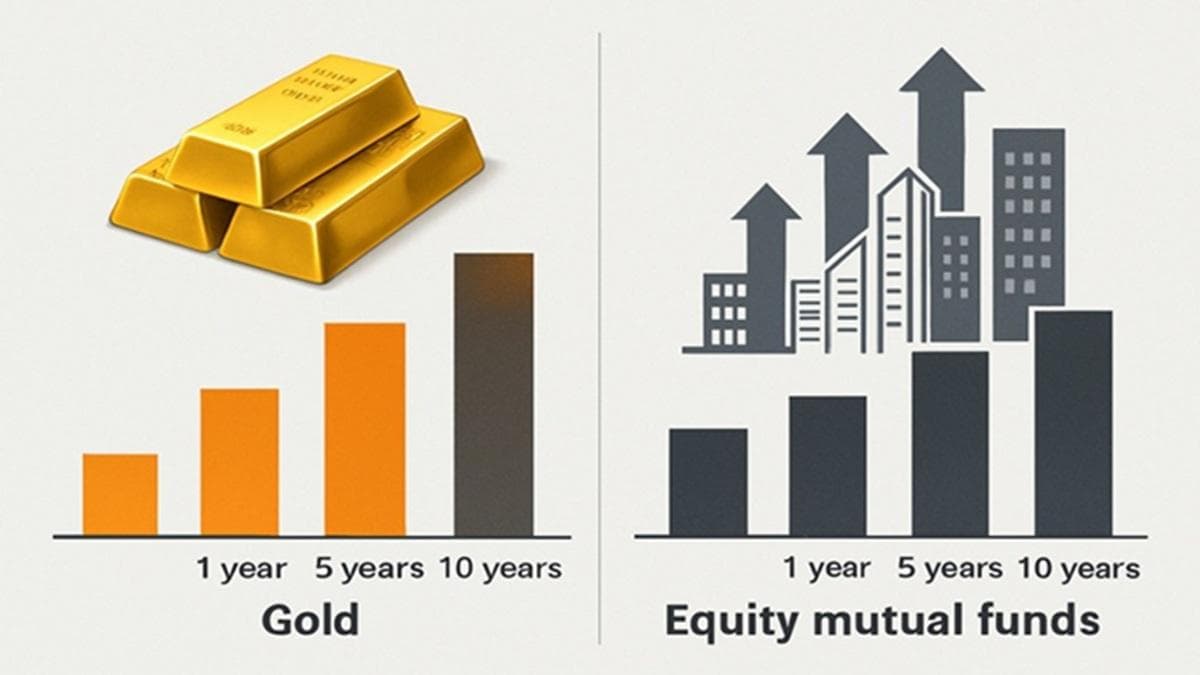
| Factor | SIP (Equity Mutual Funds) | Gold |
|---|---|---|
| Average Return (Long Term) | 10% – 14% | 6% – 10% |
| Volatility (2026) | Moderate to High | Increasing |
| Wealth Creation | Strong (Compounding) | Limited |
| Purpose | Growth | Protection |
This comparison highlights a key shift — gold is no longer purely stable, and SIP is no longer considered risky by default.
💰 Gold in 2026: Still Safe or Becoming Reactive?
Gold has traditionally performed well during uncertainty — and recent global tensions have pushed prices upward.
However, what stands out in 2026 is not just the rise, but the speed of movement.
Gold prices have seen sharp swings, reacting to:
- Geopolitical developments (especially Middle East tensions)
- Currency fluctuations (strong dollar vs weakening rupee)
- Investor sentiment shifts
In India, the impact is even more visible.
The rupee has depreciated significantly over the past year, moving closer to the ₹90+ range against the dollar. This alone has pushed domestic gold prices higher, regardless of global movement.
👉 Result: Gold is rising — but not always predictably.
📈 SIP in 2026: Consistency Over Timing
SIP investing operates on a completely different principle — discipline over prediction.
Instead of reacting to market changes, SIP allows investors to:
- Invest fixed amounts regularly
- Average out market volatility
- Benefit from compounding over time
Historically, equity mutual funds have delivered annual returns in the range of 10–14% over long periods, making SIP one of the most effective wealth-building tools.
What makes SIP more relevant in 2026 is the uncertainty itself — instead of trying to time volatile markets, investors are choosing consistency.
💡 Example: The Compounding Effect
Consider this:
- Monthly investment: ₹10,000
- Duration: 20 years
- Expected return: 12%
Total investment: ₹24 lakh Estimated value: ₹1 crore+
This kind of exponential growth is driven by compounding — something gold does not inherently provide.
⚖️ When Gold Makes More Sense
- During economic instability
- As a hedge against inflation
- For short-term safety or liquidity
Gold still plays an important role — but more as a defensive asset than a growth asset.
⚖️ When SIP Becomes the Better Choice
- For long-term financial goals
- For wealth creation
- When you want to reduce market timing risk
SIP is not about avoiding volatility — it’s about using it to your advantage.
🧠 What Investors Are Realizing in 2026
A noticeable shift is happening.
Investors are no longer choosing between gold and SIP — they are combining both.
- Gold for stability during uncertain periods
- SIP for long-term growth
This hybrid approach reflects a more mature investment mindset.
📌 Final Perspective
Gold is evolving. SIP is gaining strength.
One protects wealth. The other builds it.
In 2026, the smarter question is not “which is better” — but how much of each fits your strategy.